
The Great Separation Book Launch | Q&A with coeditor Roi Livne
With a keen attention to how culture and elite conflict shape politics, The Great Separation upends deterministic understandings of the Chinese Cultural Revolution and the market reforms that followed. This ambitious posthumous volume by sociologist Xiaohong Xu turns the existing scholarship on China’s “neoliberalism” on its head by demonstrating that the effort to separate mass politics from economic policy had its origins well before the Reform and Opening-up era.
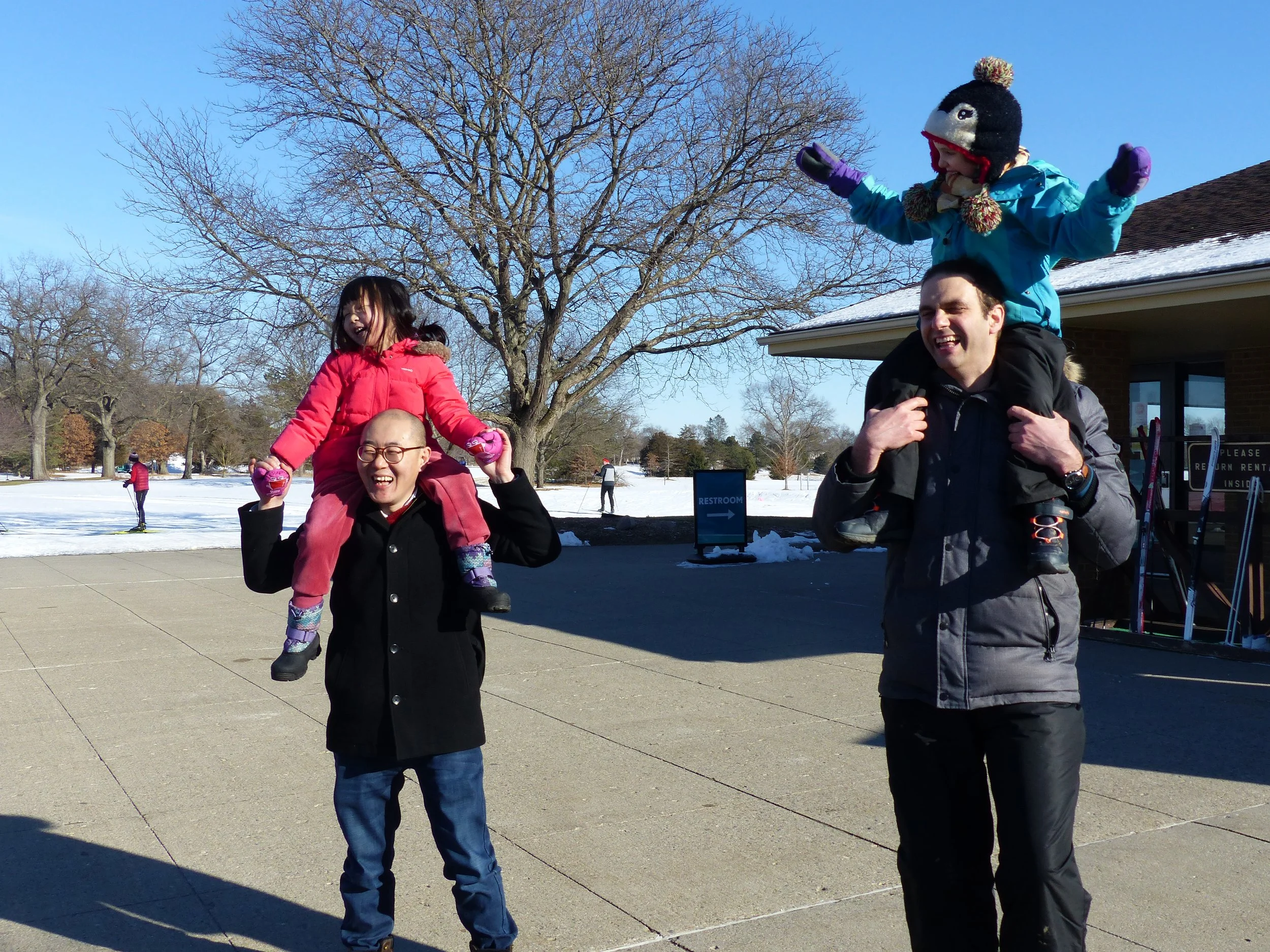
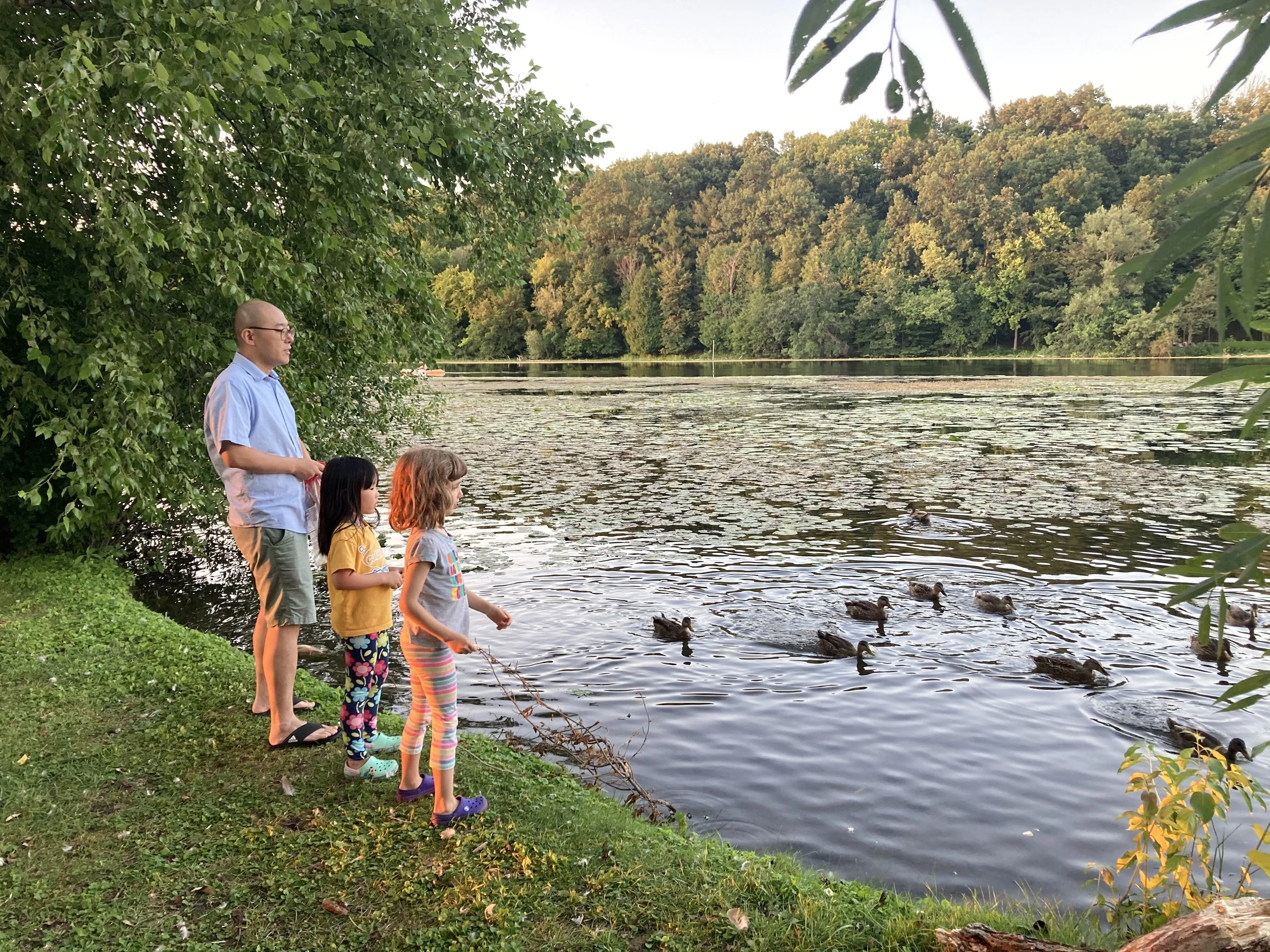
Xiaohong, Roi and their girls
In this interview, Dr. Livne discussed the editing process of this posthumous work, how ordoeconomism challenges the conventional wisdom of neoliberalism, and contributes to the studies of economic sociology and sociology of knowledge. He also shared his memories of Xiaohong, and how they developed a close friendship.
Roi Livne is a coeditor of The Great Separation and associate professor of sociology at University of Michigan. His research is situated at the intersection of the new sociology of morality, the sociology of culture, science and technology studies, medical sociology, and economic sociology.
A Chinese version of this interview is available below.
What motivated you to take on the book editing project?
Xiaohong did. About a week before he died, still in the hospital, maybe a day or two after he learned for a fact that he was dying, at around 4 a.m., Xiaohong told me that he was very disappointed he didn't get to finish his book.
This needs context. Xiaohong walked a very long path in his life. He was born in rural China to a family of modest means. He left his home at 12. Xiaohong started at this village and reached places like Peking University, Yale and the University of Michigan. So for him, dying before he was able to complete his work and mark a certain end to this journey was a real disappointment.
Don’t get me wrong, in his last days Xiaohong thought about many things. He thought and spoke about his family. About friends. About students. But he was also thinking a lot about the book. He felt that he needed to have it published in order to be able to look at his entire life as a path that in some way, even if not an entirely satisfying way, reached a conclusion, a destination.
I knew that Rob Jansen, Yang Zhang and I could do this for him. It took us almost three years, but Xiaohong now has a book with his name on it, and people will read it. Some will agree and some disagree– this is exactly what Xiaohong wanted. I am happy that we managed to do it for him.
How did you edit the manuscript?
Xiaohong gave very clear instructions. He wanted it to be a book on the Cultural Revolution. There was “The Great Separation,” an article that had not been published before, and two other pieces that had already been published in Critical Historical Studies and Sociological Theory (with Isaac Reed).
Xiaohong gave me access to his harddrive, which had the entire history of the revisions of these articles. He said that when he revised “The Great Separation” for the American Sociological Review, there was a part that he really liked and had to remove, because he needed to shorten the paper before submission. He wanted this part back. We identified it and did as he asked. As for the rest, I shared all versions of the paper with the two other editors, and we put together a plan on how to work. And then, once I managed to secure permission to reprint the two other articles and finalized the connection with the University of Michigan Press, we started working on the actual manuscript.
About the rest of the experience I wrote in the book’s introduction. The moment a person passes away, the words that he left acquire a certain weight. They feel sacred. I was looking at the text and thinking, “what would Xiaohong want me to do?” Even when it was clear to me that he would have wanted me to make this or that edit, I felt reluctant to change his original words. It was emotionally difficult.

Xiaohong Xu on a run
Eventually, we supported and empowered each other to make the necessary copyedits. We also re-added the paragraphs he had to remove from the article and wanted back. But the main guiding principle for us as editors was to change as little as we possibly could, because that's what Xiaohong requested. The text that was eventually published is really a Xiaohong text. That was our goal and I think that we achieved it. We worked very well as editors and ultimately agreed on everything.
Why the University of Michigan Press?
I talked to Mary Gallagher, who was the director of the International Institute back then and editor of the China Understandings Today series at U-M Press. She said that U-M Press would understand the project and be open to the condition Xiaohong had set: not revising the text extensively. Then I had a great conversation with Marcella Landri, the Press’s acquiring editor. She immediately understood our needs and our limits.
Publishing with U-M Press had a second advantage, which is that the manuscript will be open-access. Given that many of the potential readers of this manuscript live and work in East Asia and not all libraries there can easily purchase the book, having the manuscript accessible worldwide for free as a PDF was a major consideration.
Lastly, there was a more symbolic consideration. Xiaohong was a University of Michigan faculty member, both in the Center for Chinese Studies and in Sociology. This university was his home in his last years. He had a community here. Having his book published by the University of Michigan Press felt right.
All of these considerations coalesced into the decision to go with U-M Press. Looking back, it is clear to me that we made the right decision.
How does the book challenge the conventional understanding of neoliberalism?
Ho-fung Hung makes an extremely interesting, adventurous and original argument in the foreword of the book: In the early 1970s, the period that everybody in the West treats as the dawn of neoliberalism, when Milton Friedman was sending his boys to Chile and a little bit before Thatcherism in the UK and Reaganism in the U.S. took off, neoliberalism and ordoliberalism weren’t that popular. Actually, it seemed like capitalism was losing the cold war! Ho-fung reminds us that Friedman had difficulties finding a single good example for the success of market capitalism anywhere in the world. When you read Free to Choose, you see that Friedman had to go as far as Hong Kong to find an empirical case that purportedly supported his model, and, well, his analysis of Hong Kong was absurdly inaccurate.
Ho-fung makes the point that, if you take Xiaohong’s work seriously, you see that it is not that the Chinese imported neoliberalism from the UK and the U.S. It's almost the opposite. Deng Xiaoping’s denunciation of the Cultural Revolution reverberated throughout the world and ultimately led to the complete delegitimation of the Stalinist bureaucratic state. It was only then that neoliberalism became the so-called only alternative, readily embraced by the left and the right and applied… well, everywhere. So, this book basically turns the entire world history on its head.
What does the book contribute to economic sociology and sociology of knowledge?
The Great Separation, the title of the book, plays on Karl Polanyi's book, The Great Transformation. He's engaging Polanyi throughout the book’s main chapter, and Polanyi is one of the main and classical figures in the field of economic sociology. I think Xiaohong is applying Polanyi in a very intriguing and original way, using him to analyze the evolving distinction between politics and economics in China.
It's also a sociology of knowledge argument. From my perspective, the Great Separation is in dialogue with Timothy Mitchell and his book Rule of Experts. Originally, Mitchell argued that this separate, distinguishable social sphere that people call “the economy" was created by experts, largely economists and accountants. Around the 1930s these experts introduced various tools of calculation, means of measurement, and techniques of management, which resulted in an effect: something that everybody sees and identifies as the national economy.
I think that Xiaohong, when studying the Chinese case, shows that this fabrication, or essentialization of the economy can begin in a completely different way, through political maneuvers rather than expert practices. This would be the contribution that I see to economic sociology and specifically to scholarship on economic knowledge.
What did Xiaohong originally envision for the monograph he hoped to write?
Xiaohong was planning to expand chapter 3, “The Great Separation,” into an entire book. This is also how this chapter should be read. The chapter is essentially a book written in very broad brush strokes. If Xiaohong had had the time, he would have developed The Great Separation’s sections, and even paragraphs, into complete chapters that would add up into a book.
My sense is that it would not have been a Theda Skocpol type of book that compares different revolutions. Maybe he would have used comparisons strategically, but I don't think he would have delved into them as deeply as he delved into the Cultural Revolution. Although, look, he was an ambitious person. Maybe he would have done it eventually. Who knows?
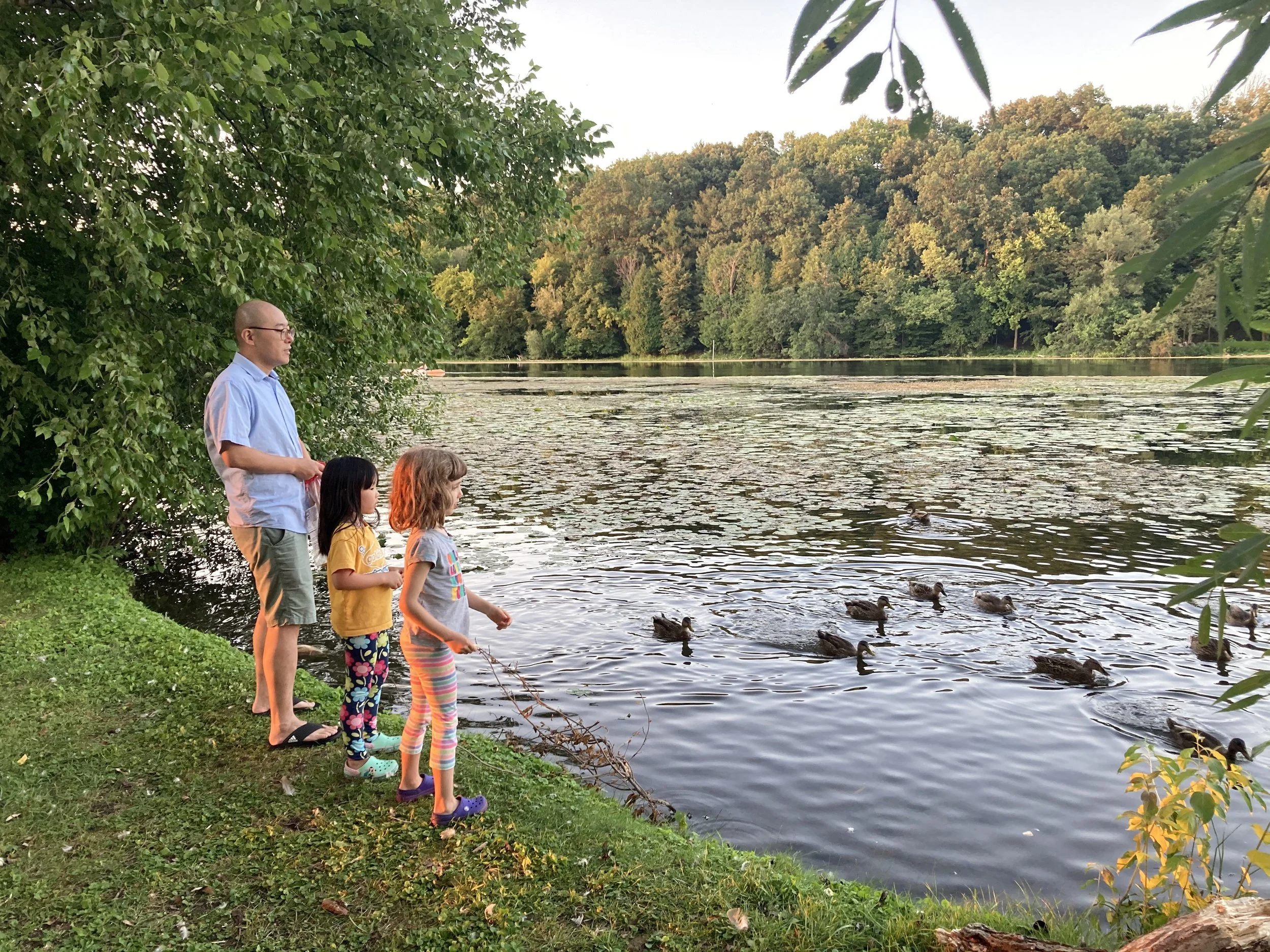
Xiaohong with his and Roi’s daughters
How did you first meet Xiaohong and become close friends?
We met at a social gathering in the summer of 2019, shortly after he joined our department. We realized we had daughters close in age, and we introduced them to each other. We hung out with our partners and with our daughters several times that semester.
The last time I saw him and his family before COVID was at their first condo in Ann Arbor. COVID was already spreading in China and we were talking a lot about the situation there.Then some time later, boom, the sky fell on everybody's head here and everything shut down. But we talked, and the girls were in touch with each other. One day, Lang, his wife, caught their daughter speaking to squirrels in their backyard. She realized that their daughter missed the company of children so much that she was trying to befriend squirrels! The situation was not very different with my daughter, so we decided to basically merge our households. When the school year started, we began homeschooling our daughters together. For the entire COVID period, maybe a year and a half, Xiaohong and Lang were the only two adults that we saw in-person every day. My daughter slept a couple of days a week at their place, and their daughter slept in our house regularly. The girls were like sisters. We all developed a very close friendship.
Then, in the midst of all that, he got the cancer diagnosis, which extended the COVID experience for him and us. We all had to be careful, because he was immunocompromised. I think this was one reason why the friendship became so deep and intense. I met Xiaohong in 2019. He died in 2023. It's only four years, but it's four years in which we were really the main people in each others’ lives.
What kind of scholar and person was Xiaohong?
Because of COVID, I saw him almost every day, but I didn't see him in his social circles. And it was only when he was dying and I saw this stream of people coming here, emailing and calling him (and me), and offering all kinds of support that I understood what a gregarious person Xiaohong was and how much he meant to so many people. I was sitting by his hospital bed reading emails to him. He and I had common friends that I didn't even know about. We also got emails from people who were not friends of his, some didn’t even know him personally, like students in China who wanted to apply to graduate school in the U.S. and sent an inquiry to him. Xiaohong was writing and talking to them, investing tremendous amounts of time, just because he wanted to help other people who aspired to walk that path that he managed to walk. People remember such things. There was one graduate student who talked to him once and didn't get admitted to our program. She heard on social media that Xiaohong was not doing well and immediately wrote an email.
That's a part of Xiaohong I learned about only when he was dying. It was incredible to see how many people knew him. He made me feel like China was a really small place.
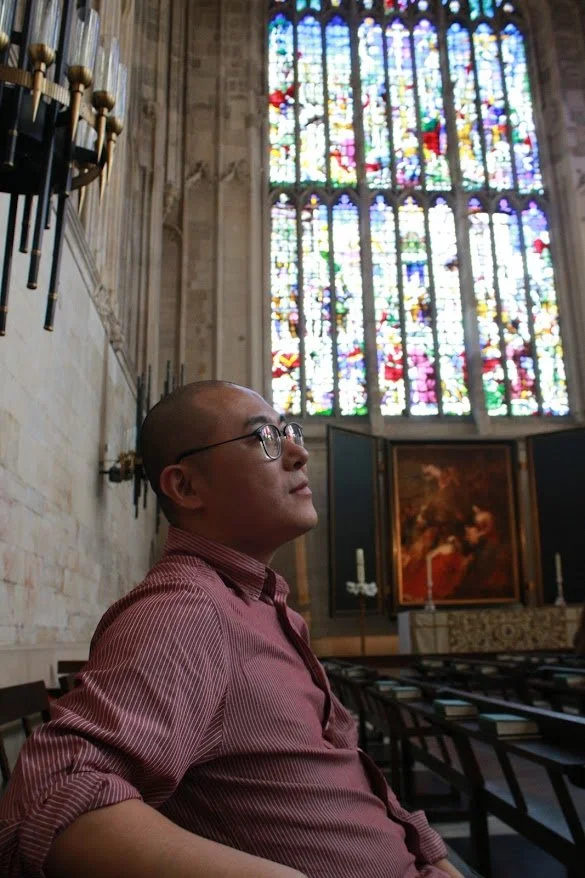
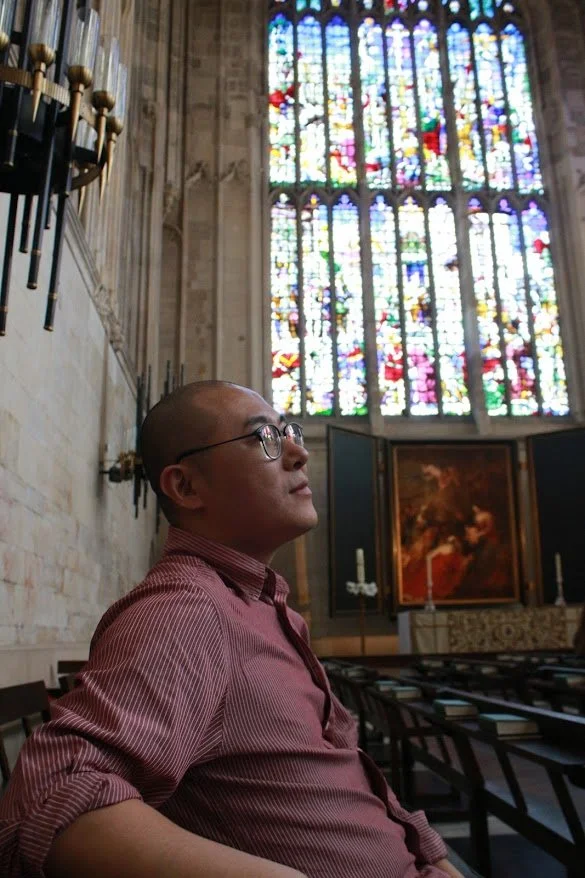
Xiaohong Xu inside a church
But I think that the best account of the person and scholar Xiaohong was is in the essay Lang Chen published shortly after Xiaohong left us. It was a brilliant and honest tribute to a person who genuinely wanted to be good–wanted to be good for his family, wanted to be good in general and wanted to be a good scholar–but lived in the harsh reality of our academic world. I prefer this description to any attempt to put Xiaohong on a pedestal and idolize him as if he was a saint. Xiaohong’s charm and the beauty of his personality were in his imperfections. He was a person who saw the flaws in the world and in himself, acknowledged them, and refused to give up.
This is why I think that Lang’s essay did justice to Xiaohong and who he really was - an exceptionally warm person who truly cared about people. He would drop everything selflessly to help someone. And he also fiercely believed in intellectual life, almost to a fault. There was not a trace of cynicism in him. Ever. It's very hard to find an academic who is not a little bit cynical about their work, saying that nobody would ever read it and the few who would wouldn’t actually understand it. From here, the way to thinking that your work doesn’t truly matter is very short. Xiaohong, on the other hand, wrote as if every word he typed had the potential to change the world, maybe not in a practical way, but in an existential way for sure. He believed his words and his ideas could reveal inner truths about the world, which had value even if few read and fewer understood them. This is why he was so serious about sociology. This is what drove him until his very last moments.
How did the idea for Xiaohong's memorial fellowship take shape, and why does it focus on international students working on China?
These particular ideas are Elizabeth Armstrong's, Michigan Sociology’s Department Chair. Very shortly after Xiaohong passed away, she started fundraising for the fellowship. What she had in mind is that the best way to honor Xiaohong was creating a path for people who have a similar life trajectory - international students doing work on China or similar topics, which he cared about. Now we have fabulous people like Prof. Bolun Zhang from Zhejiang University and Prof. Yan Long from UC Berkeley, who are turning the fundraiser into an international drive. They’re giving me a déjà vu to those heartwarming days when Xiaohong’s friends from literally all around the world gathered to support him and his family.
It is going to be a fellowship that will be open not only to sociology students, but also other students at U-M who meet its conditions. If we manage to have a successful fundraiser, this fellowship will also be generous enough to make a difference in the trajectory of graduate students. So we would be able to support future students who are interested in the topics that Xiaohong was interested in, and come from life circumstances and life trajectories that Xiaohong came from. Each of these students would carry Xiaohong’s memory and continue his legacy here at the University of Michigan.
I think that this fellowship and the book are very beautiful ways to keep Xiaohong alive among us. The book already exists. Now I hope people will help us bring the fellowship into existence.
《大分离》(The Great Separation)从文化与精英冲突如何塑造政治出发,颠覆了对中国文化大革命及其后市场改革的决定论式理解。这部立意宏大的遗著出自社会学家徐晓宏之手。书中指出,将大众政治与经济政策相分离的努力早在改革开放时代之前便已发端,由此彻底翻转了现有关于中国“新自由主义”的研究。
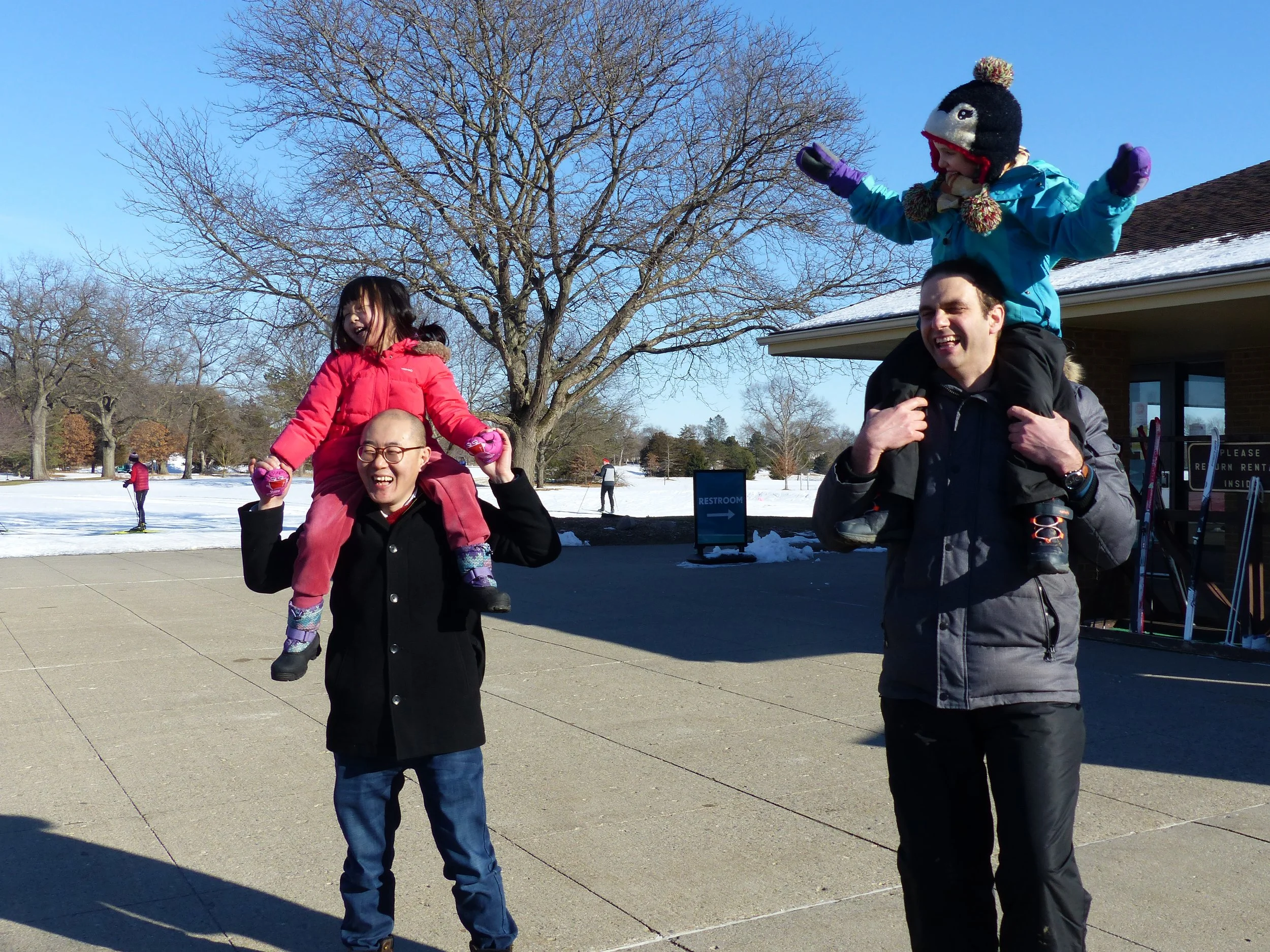
晓宏、Roi和他们的女儿
在与中国中心的访谈中,Roi Livne博士讨论了这部遗著的编辑过程、秩序经济主义(ordoeconomism)如何挑战关于新自由主义的传统认识,以及本书对经济社会学和知识社会学的贡献。他还分享了对晓宏的回忆,以及两人如何结下深厚的友谊。
Roi Livne是《大分离》的编辑之一、密西根大学社会学系副教授。他的研究处于新道德社会学、文化社会学、科学技术研究、医学社会学与经济社会学的交叉领域。
你为什么决定承担这本书的编辑工作?
为了晓宏。那时候距离他去世大约一周,也是在他确知自己将不久于人世的一两天后。凌晨四点,晓宏在医院里告诉我,他因未能完成自己的专著而深感失望。
这需要一些背景。晓宏一生走过了一条漫长的旅途。他出生在中国农村一个并不宽裕的家庭,十二岁便离家求学。晓宏从那个村庄出发,一路走到北京大学、耶鲁大学和密西根大学。所以于他而言,在完成自己的著作、为这段旅程画上某种句点之前离世,是一种真切的失望。
别误会,在生命的最后几天中,晓宏想了很多事情。他考虑和谈论自己的家人、朋友和学生。但他也一直在思考这本书。他觉得,必须让这本书出版,他才能把自己的一生看作一条在某种意义上走到了终点、抵达了目的地的道路,即便这种抵达并不完全令人满意。
我知道,Rob Jansen、张杨和我可以为他完成这件事。我们花了将近三年时间,如今晓宏有了一本署名著作,人们会阅读书的内容。有人会赞同,有人会反对,而这正是晓宏想要的。我很高兴我们为他做到了。
你们是如何编辑这部书稿的?
晓宏交代得非常清楚。他希望这是一本关于文化大革命的书。书稿包括此前未曾发表的文章《大分离》,以及另外两篇已经发表的文章,分别刊于《批判历史研究》(Critical Historical Studies)和《社会学理论》(Sociological Theory,与Isaac Reed合著)。
晓宏把他硬盘的权限给了我,里面保存着这些文章历次修改的完整记录。他说,在为《美国社会学评论》(American Sociological Review)修改《大分离》时,有一部分内容他非常喜欢,却不得不因篇幅要求删去。他希望把这部分加回来。我们找到了这部分内容,并照他的意思做了。至于其他部分,我把这篇文章的所有版本都分享给另外两位编者,一起制定了工作计划。之后,在我取得另外两篇文章的重印许可,并与密西根大学出版社敲定合作之后,我们便开始着手处理书稿本身。
其余的经历,我写在了本书的导言里。一个人离世的那一刻,他留下的文字便有了某种分量,仿佛变得神圣。我面对书稿时会想:“晓宏会希望我怎么做?”即便我很清楚他会希望我做这样或那样的修改,我仍不忍改动他的原话。这在情感上很艰难。

最终,我们彼此支持、相互鼓励,完成了必要的文字编辑。我们还把他当年不得不从文章中删去、又希望恢复的段落重新补了回去。但作为编者,我们的首要原则是尽可能少做改动,因为这是晓宏的要求。最终出版的文字真正是属于晓宏的。这是我们的目标,我想我们做到了。我们几位编者合作得非常好,最终在所有问题上都达成了一致。
为什么选择密西根大学出版社?
当时我和高敏(Mary Gallagher)谈过,她那时是国际研究院院长,也是密西根大学出版社China Understandings Today丛书的主编。她说,密西根大学出版社会理解这个项目,也会愿意接受晓宏设下的条件,也即不对文本做大幅修改。随后,我和出版社的组稿编辑Marcella Landri进行了一次很愉快的交谈。她立刻理解了我们的需求和我们的限制。
在密西根大学出版社出版还有第二个好处:书稿将以开放获取的形式发布。考虑到这部书稿的许多潜在读者生活和工作在东亚,而那里并非所有图书馆都能轻易购入这本书,让全世界的读者都能免费获取PDF版本,是一项重要的考量。
最后,还有一层更具象征意义的考虑。晓宏曾在密西根大学的社会学系和中国研究中心担任教职。这所大学是他最后几年的家,他在这里有属于自己的社群。由密西根大学出版社出版他的书,感觉顺理成章。
所有这些考虑汇聚在一起,促成了选择密西根大学出版社的决定。回头看,我很清楚我们做出了正确的选择。
这本书如何挑战了关于新自由主义的传统理解?
孔诰烽在本书序言中提出了一个极其有趣、大胆而富有原创性的论点:二十世纪七十年代初,也就是西方公认为新自由主义开端的时期,米尔顿·弗里德曼正把他的“芝加哥男孩”派往智利,英国的撒切尔主义和美国的里根主义也即将兴起,然而新自由主义和秩序自由主义当时其实并不那么流行。事实上,那时看起来资本主义似乎正在输掉冷战!孔诰烽提醒我们,弗里德曼很难在世界上任何地方找到一个能证明市场资本主义成功的好例子。读《自由选择》时你会发现,弗里德曼需要将目光投向香港,才能觅得一个据称能支持其模型的经验案例,而他对香港的分析,实话说,错得离谱。
孔诰烽指出,如果认真对待晓宏的研究,你会发现,并不是中国人从英美引进了新自由主义。情况几乎恰恰相反。邓小平对文化大革命的否定在全世界引起回响,最终导致斯大林式官僚国家彻底丧失合法性。直到那时,新自由主义才成了所谓“唯一的选择”,被左翼和右翼欣然接受,并被应用于世界各个角落。所以,这本书基本上颠覆了整部世界史。
这本书对经济社会学和知识社会学有何贡献?
本书书名《大分离》化用了卡尔·波兰尼的著作《大转型》。在本书的主体章节中,晓宏始终在与波兰尼对话,而波兰尼正是经济社会学领域最主要的经典人物之一。我认为,晓宏以一种非常引人入胜且富有原创性的方式运用了波兰尼的理论,借助他来分析中国政治与经济之间不断演变的区分。
这本书同时也提出了知识社会学的论点。在我看来,《大分离》是在与蒂莫西·米切尔及其著作《专家之治》(Rule of Experts)对话。米切尔原本的论述是,人们称之为“经济”的这个独立、可辨识的社会领域,是由专家创造出来的。这些专家主要是经济学家和会计师。大约在二十世纪三十年代,他们引入了各种计算工具、测量方式和管理技术,由此产生了一种效应:一个人人都能看到、并认作“国民经济”的东西。
我认为,晓宏通过研究中国案例表明,这种对经济的制造,或者说本质化,可以以一种完全不同的方式开始:经由政治操作,而非专家实践。在我看来,这就是它对经济社会学,特别是对经济知识研究的贡献。
晓宏对他原本希望写的专著有怎样的设想?
晓宏原本计划把第三章《大分离》扩展成一整本书。这也是阅读这一章应有的方式。这一章本质上是一本以粗线条勾勒而成的书。如果晓宏有时间,他会把《大分离》的各个小节,甚至各个段落,发展成完整的章节,最终合成一本书。
我的感觉是,那不会是一本西达·斯考切波式比较不同革命的书。也许他会有策略地运用比较分析,但我不认为他会像深入研究文化大革命的案例那样深入地探讨这些比较案例。不过话说回来,他是个很有抱负的人。也许最终他会那样做。谁知道呢?
你和晓宏是如何认识并成为挚友的?
我们是在2019年夏天的一次聚会上认识的,那时他刚加入我们系不久。我们发现彼此的女儿年龄相仿,便介绍她们认识。那个学期,我们和各自的伴侣、女儿一起聚过好几次。
新冠疫情之前,我最后一次见到他和他的家人,是在他们安娜堡的第一套公寓里。当时新冠已经在中国蔓延,我们谈了很多那边的情况。过了一段时间,轰的一声,这边的天也塌了,砸在每个人头上,一切都停摆了。但我们一直保持联系,女孩们之间是。有一天,他的妻子陈朗撞见女儿在后院对着松鼠说话。她意识到,女儿太想念和其他孩子相处的时光了,以至于想和松鼠交朋友!我女儿的情况也差不多,于是我们决定差不多把两家合并了。新学年开始后,我们开始一起在家教育两个女儿。在整个疫情期间,大概一年半的时间里,晓宏和陈朗是我们唯一每天线下见到的两个成年人。我女儿每周有几天在他们家过夜,他们的女儿也经常住在我们家。两个女孩就像亲姐妹一样。我们所有人都结下了非常深厚的友谊。
然后,就在这一切当中,他被诊断出癌症,这让他和我们的疫情体验又延长了。因为他免疫力低下,我们都必须格外小心。我想,这正是我们的友谊变得如此深厚、如此紧密的原因之一。我在2019年认识晓宏,他在2023年去世。只有短短四年,但在这四年里,我们确实是彼此生命中最重要的人。
晓宏是一位怎样的学者、怎样的人?
因为疫情,我几乎每天都能见到他,但我没见过他在自己社交圈中的样子。直到他临终之际,我看到源源不断的人来到这里,给他(和我)发邮件、打电话,提供各种各样的帮助,我才明白晓宏是一个多么交游广阔的人,他对那么多人是那么重要。我坐在他的病床边给他读邮件。他和我有之前甚至都不知道的共友。我们也收到了一些并非他亲密友人的邮件,有些人甚至不认识他本人,比如想申请美国研究生院、曾写信向他咨询的中国学生。晓宏会给他们写信,和他们交谈,投入大量的时间,只是因为他想帮助那些有志之人走上他曾走过的道路。人们会记得这样的事。有一位研究生只和他聊过一次,后来也没有被我们的项目录取。她在社交媒体上得知晓宏情况不佳,立刻写了邮件过来。
这是我直到他临终时才了解的一部分晓宏。看到有这么多人认识他,真让人惊叹。他让我觉得,中国好小。
但我认为,关于晓宏作为一位学者和一个人,最好的描述是陈朗在晓宏离开我们后不久发表的那篇文章。那是一篇精彩而坦诚的致敬之作,写的是一个真心想做好人的人:他想为家人做一个好人,想做一个普遍意义上的好人,也想做一个好学者,却生活在我们学术世界的严酷现实之中。比起任何把晓宏捧上神坛、把他当作圣人来崇拜的尝试,我更喜欢这样的描述。晓宏的魅力和他人格的美好之处,恰恰在于他的不完美。他是一个能看见世界的缺陷、也能看见自身缺陷的人,他承认这些缺陷,却拒绝放弃。
这就是为什么我认为陈朗的文章公正地呈现了晓宏真实的样子:一个格外温暖、真正关心他人的人。他会无私地放下一切去帮助别人。他也笃信智识生活,几乎到了过分的地步。他身上没有一丝犬儒。从来没有。其实很难找到一个对自己的工作没有一点犬儒心态的学者。他们会说,没人会读自己的作品,少数读的人也不会真正理解。从这里到认为自己的工作其实并不重要,只有一步之遥。晓宏则不然,他写作时,仿佛敲下的每一个字都有改变世界的潜力。也许不是在实践的层面上,但一定是在存在的层面上。他相信自己的文字和思想能够揭示关于世界的内在真相,而即便读的人很少、懂的人更少,这依然有其价值。这就是他如此严肃对待社会学的原因,也是驱动他直到生命最后一刻的力量。
晓宏纪念奖学金的构想是如何形成的?为什么它聚焦于研究中国的国际学生?
这些具体构想来自密西根大学社会学系主任Elizabeth Armstrong。晓宏去世后不久,她就开始为这项奖学金筹款。她的想法是,纪念晓宏的最好方式,是为那些与他人生轨迹相似的人开辟一条道路,也就是研究中国或类似课题的国际学生,而这正是晓宏所关心的。如今,浙江大学的张博伦教授、加州大学伯克利分校的龙彦教授等了不起的人正在把这次筹款推向国际。他们让我仿佛重回那些温暖人心的日子,那时晓宏来自世界各地的朋友纷纷聚集起来,支持他和他的家人。
这项奖学金不仅面向社会学专业的学生,也面向密西根大学其他符合条件的学生。如果筹款顺利,这项奖学金的资助力度也将足以改变学生的生涯。这样,我们就能支持那些对晓宏关注的议题感兴趣、并且与晓宏有着相似生活境遇和人生轨迹的未来学生。每一位这样的学生都将承载对晓宏的记忆,在密西根大学延续他的精神遗产。
我认为,这项奖学金和这本书都是以非常美好的方式,让晓宏活在我们中间。书已经问世了。现在,我希望大家能帮助我们让这项奖学金成为现实。
Interview and translation by Larissa Liao